The Three Types of Rock
All rocks on Earth can be grouped into three main types based on how they are formed. These are igneous, sedimentary, and metamorphic rocks. Each type forms in a different way and plays an important role in shaping Earth’s surface. Together, they are linked through the rock cycle, which shows how rocks can change over time.
Igneous Rocks
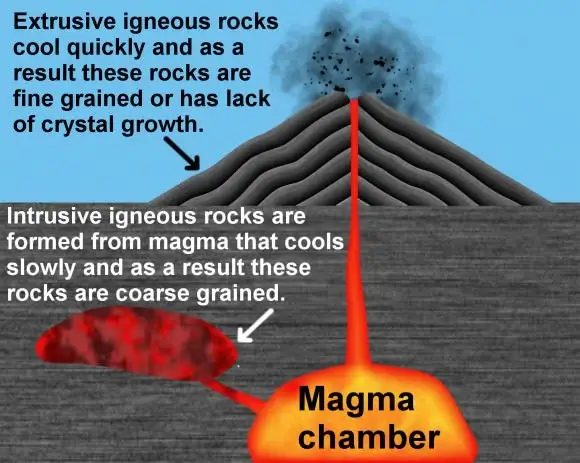
Igneous rocks form when molten rock cools and solidifies. This molten rock is called magma when it is below the Earth’s surface and lava when it reaches the surface during a volcanic eruption. Igneous rocks can form slowly underground, creating large crystals, or quickly at the surface, producing small crystals or glassy textures.
Examples of igneous rocks include basalt and granite. Igneous rocks are closely linked to volcanic activity and plate boundaries.
Sedimentary Rocks
Sedimentary rocks form from layers of sediment that have been deposited over time. These sediments may include sand, mud, pebbles, or the remains of plants and animals. Over millions of years, the layers are compacted and cemented together to form solid rock.
Sedimentary rocks often contain fossils and are usually found in layers called strata. Common examples include sandstone, limestone, and shale.
Metamorphic Rocks
Metamorphic rocks form when existing rocks are changed by heat and pressure deep within the Earth. This process does not melt the rock, but it alters its structure and mineral composition. Metamorphic rocks often become harder and more compact than the original rock.
Examples of metamorphic rocks include marble, which forms from limestone, and slate, which forms from shale. These rocks are commonly found in areas where tectonic plates collide.
The Rock Cycle
The three types of rock are linked through the rock cycle. Igneous, sedimentary, and metamorphic rocks can all change into one another over time through processes such as erosion, heat, pressure, melting, and cooling. This cycle shows that rocks are constantly being recycled as the Earth’s surface and interior change.