

The Mid-Atlantic Ridge
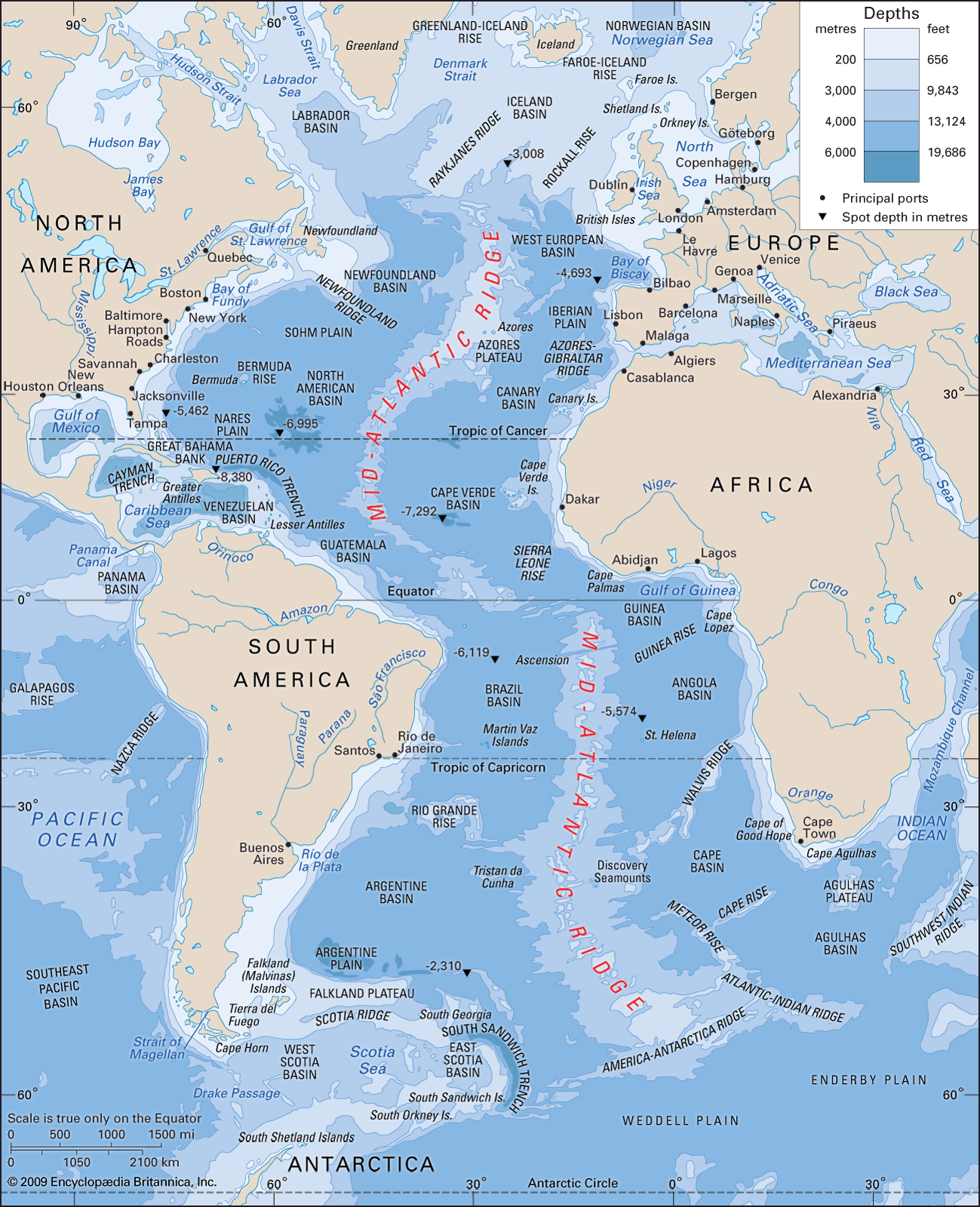
The Mid-Atlantic Ridge is a vast underwater mountain range that runs down the centre of the Atlantic Ocean. It marks a constructive plate boundary where tectonic plates are slowly moving apart. As the plates separate, magma rises from the mantle and cools to form new oceanic crust.
How the Mid-Atlantic Ridge Formed
The Mid-Atlantic Ridge formed where the North American Plate is moving away from the Eurasian Plate, and the South American Plate is moving away from the African Plate. As these plates pull apart, magma rises through the gap, cools, and solidifies. This process is known as ocean floor spreading.
Over millions of years, repeated eruptions have built up a long chain of underwater mountains, creating the ridge that stretches for thousands of kilometres beneath the Atlantic Ocean.
A Constructive Plate Boundary
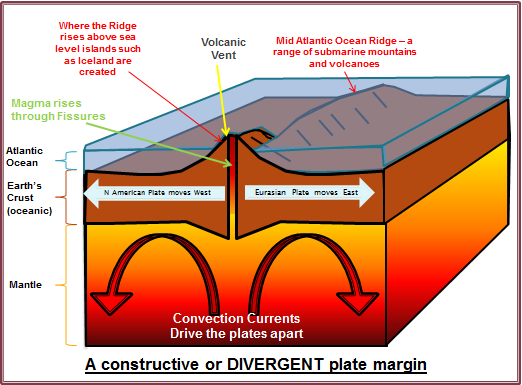
The Mid-Atlantic Ridge is a clear example of a constructive plate boundary. At this type of boundary:
• Plates move away from each other
• Magma rises from the mantle
• New crust is formed
Unlike destructive plate boundaries, no crust is destroyed here. Instead, the ocean floor slowly grows wider as new rock is added along the ridge.
Iceland: Where the Ridge Reaches the Surface
In most places, the Mid-Atlantic Ridge lies deep beneath the ocean. However, in Iceland, the ridge rises above sea level. Iceland sits directly on the boundary between two tectonic plates, which explains its frequent volcanic activity and geothermal features.
This makes Iceland one of the best places on Earth to observe a constructive plate boundary on land.

